Showing posts with label Between The Pages. Show all posts

Monday, March 04, 2013

Q&A with GT Herren


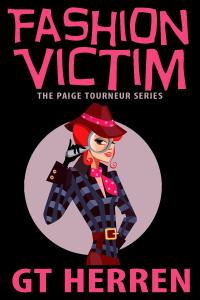
fashion victimAs a former reporter, I can catch a writer when they've never had newspaper experience. But Paige Tourneur is spot on. Were you a reporter in a past life, or just a really good researcher?!?
 Oh, thank you so much! No, I was never an actual reporter. I wanted to be one, but changed major my freshman year in college. I do know a lot of reporters and former reporters, and my editor, Julie Smith, was a long time journalist, first with the New Orleans Times-Picayune and then with the San Francisco Chronicle. Any time I had a question, all I had to do was ask. She was a HUGE help to me.

Paige has a secret past. How much longer will you make us wait to find out her back story?
 The story of Paige’s past is going to slowly play out over the course of at least a few more books. There’s a lot of back story there, and I don’t want to just dump it all out in one fell swoop. But there is definitely going to be a big pay-off for the readers, so I certainly hope they’ll buckle their seatbelts and come along for the ride!

Was there a challenge in writing from a woman's POV?
 Well, I was a little worried about authenticity. But I’ve always been surrounded by women—I had a sister who was very close to me in age, and I’ve always had a lot of women friends, and still do—so I was pretty sure I could get the voice right. I also had, as I mentioned before, an amazing editor who is a woman, and I knew if I made a false step she’d be on it like a duck on a june bug.
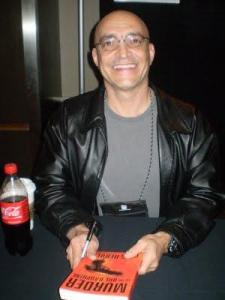
Author GT Herren
Author GT Herren
For the writers out there, do you write by the seat of your pants, or outline?
With my first few books, I outlined everything. But I stopped around Book 5, I think it was, because I kept straying away from the outline so it seemed like a waste of time, since I kept coming up with new ideas and changing everything. Now, I just have it all in my head and if I get stuck, then I sit down and outline what I’ve already written and then go from there. I may not actually use what I come up with, but it usually unsticks things. I always know how it’s going to end—it’s the getting there that changes a lot.

New Orleans is a character unto herself in Fashion Victim. Allow us into your world and describe your perfect New Orleans day.
Well, to me every day in New Orleans is perfect, but I think the most perfect day I’ve ever had in New Orleans was Fat Tuesday in 2006. It was amazing. It was after Katrina, and most of the city was still in ruins—and there had been a lot of criticism nationwide of the city for not cancelling it. But for all of us, that Mardi Gras was a symbol of perseverance and determination, a way for New Orleans to announce to the world that we weren’t going to let what happened get us down, or keep us down, to let everyone know we loved them for their help and their concern and their love and we weren't going to let them down. And it was a spectacular day, in the high 70’s, no humidity, no clouds, just sunshine and blue sky everywhere you looked. I’ll never forget walking to the French Quarter from my house along the parade route, and all the signs like “504ever” and “Atlanta Thanks and Loves You, NOLA” and “NOLA Is Down But Never Out”—my eyes filled with tears several times that day (even now remembering I get teary) and I just knew in my heart that day that New Orleans was going to be back. Everyone was so happy, that wonderful feeling of community we always felt on Fat Tuesday was really strong that day, and everyone was in costume and celebrating. It felt like coming home.

Fashion Victim ButtonExcerpt from Fashion Victim:
Fashion shows are not my thing, as a rule. But this had been Marigny Mercereau’s first show in New Orleans since Hurricane Katrina, and my boss decided this was a big enough deal to warrant putting Marigny on the cover. She was getting the full treatment—coverage of the runway show, a cover shoot, and an in-depth interview. I wasn’t convinced she deserved it, frankly. Don’t get me wrong—I knew it was agood thing that the House of Mercereau was open for business again. Any business coming back since Katrina was terrific, a sign that things were getting back to normal—whatever that meant in New Orleans.

But a cover story on a business whose primary clientele was rich w
omen, drag queens, and high school girls in the market for a prom dress?

I pointed out to my boss this was hardly a newsworthy enough story in our post-Katrina world to warrant such coverage—even if Marigny was a huge advertiser, which she never had been and was unlikely to become. Since I’d gone to work at Crescent City we’d moved away from being a fluff magazine about the city to doing more in-depth investigative pieces—because as a monthly, we could do the kind of in-depth reporting the city’s daily and weekly papers couldn’t, and we were doing quite well with this kind of hard-hitting journalism.

I didn’t understand the return to fluff, but gave in with good grace.

Choosing your battles wisely is becoming a lost art.

I didn’t even bat an eye when the interview was assigned to me—at Marigny’s request. I knew her—I’d dated one of her sons briefly in the pre-Katrina world, and for some reason Marigny liked me. She seemed rather pretentious to me, and her sense of humor was odd…and it’s not like I was really into the entire fashion scene.  But before I had a chance to say okay, my boss gave me the whole ‘team player’ speech.
Obviously, she was expecting me to pitch a fit of some sort.

But I loved working at ­Crescent City, and I really liked my boss. It was a great job, and a huge improvement over working at the city’s daily paper—and besides, there was that whole choose your battles wisely thing. I figured I could use the good will I’d earn doing the Marigny Mercereau interview to my advantage later. We’d scheduled the interview for later this afternoon—so I really needed to pull it together. Marigny had also sent me tickets to her fashion show last night—enclosing them in a card with the note so looking forward to seeing you again, xoxoxoxoxo Marigny—in what she called her ‘trademark’ pink ink.

After all, nothing screams ‘professional’ like pink ink, right?


Author Bio:
Greg Herren is a New Orleans-based author and editor. Former editor of Lambda Book Report, he is also a co-founder of the Saints and Sinners Literary Festival, which takes place in New Orleans every May. He is the author of ten novels, including the Lambda Literary Award winning Murder in the Rue Chartres, called by the New Orleans Times-Picayune “the most honest depiction of life in post-Katrina New Orleans published thus far.” He co-edited Love, Bourbon Street: Reflections on New Orleans, which also won the Lambda Literary Award. He has published over fifty short stories in markets as varied as Ellery Queen’s Mystery Magazine to the critically acclaimed anthology New Orleans Noir to various websites, literary magazines, and anthologies.

Tuesday, February 19, 2013

American History: Executive Order 9066

February 19, 1942: President Roosevelt signs the executive order to place Japanese Americans in internment camps.

Andy Munemitsu, a character in Lost in the Light, was named in honor of the Munemitsu family who leased their farm to Gonzalo and Felicitas Mendez before the Japanese-American internment. The Mendez family took care of the property until the Mumemitsu’s were released after the war. The two families united when Gonzalo and Felicitas took on the local school districts in the historic case, Mendez v. Westminster and ended segregation in California public schools.

Here’s a story about their connection: http://blogs.chapman.edu/happenings/2010/05/10/munemitsu-unveiling-today-at-leatherby-libraries/


Guest post: Into the Dark Places with Katherine Owen


Today, Katherine Owen stops by on her Chick Lit Blog Tour to talk about her new novel, When I See You and going into the dark places.

I strongly believe in the adage: art imitates life. I strenuously believe in this. (I’m adding a little Demi Moore there, if you remember the movie A Few Good Men.) Writing for me begins with life experiences and goes from there. I’ll ask myself the what-if questions in the beginning, such as what does a woman do who has been left behind? This premise began in my novel Seeing Julia. One of the scenes I cut from that novel metamorphosed into this novel When I See You because the idea of the soldier story just wouldn’t go away. At first, I started out with just Jordan Holloway’s point of view, but then, it became obvious as the characters formed that readers would also need to hear from Brock Wainwright. Two points of view from both a male character and a female one made the whole story that much more complex. I also wanted to explore the idea of two accomplished people who seemed to have everything; and yet, beneath the surface something seems to be missing within them. I think readers get that sense with both of these characters early on.

So, let’s talk in general terms about the dark places. I can effectively put people into two different places in their lives. It’s what I call the dark zone and the white area outside of the dark zone. The dark zone is that place where all the bad stuff happens in the world. You lose a loved one—someone close to you. It can be a husband, a brother, a father, a mother, a sister, a child…I could go on, but you get the picture. Yet, there are those people around you who haven’t experienced the dark zone. They go about their lives oblivious to the damage that grief does to a person’s soul because nothing bad has ever happened in their world. In the time of someone else’s crisis, they do the right things. They send the sympathy cards and the flowers, attend the funerals, and wear black, and even hold your hand. They make you casseroles and tell you how sorry they are, but, in the end, they really don’t get it, until it happens to them because people don’t like to spend time in the dark zone. Truly? They don’t even really want to talk about you and your loss or find out what it’s like or how you feel.

As it relates to my novels, it seems I have three types of readers: empathetic ones who’ve been to the dark zone, sympathetic ones who’ve never been but still get it and me, and a third kind who don’t even know what the dark zone entails and don’t want to. Those are the ones who read my work and conclude this stuff just doesn’t happen in real life, let alone fiction. Yet, it does; and, someday, they’ll find that out for themselves when they land in the dark zone at the unexpected loss of a loved one and their insulated world is blown to bits. Going to the dark places is relatively easy for me because there are many stories to be told from there because I’ve been to the dark zone in real life and many of my readers recognize this in my work.

Katherine Owen is the author of SEEING JULIA
(debut novel and Zola Award Winner),
NOT TO US and WHEN I SEE YOU.
My writing is not for the faint of heart. It will rock you to your soul if you recognize that kind of pain of heartbreak and loss, but at the heart of it, I think it gives people a little hope. At least, that’s what some of the reviewers of my work have said. Here’s a snippet from one of the most reviews of When I See You that states it quite nicely:

“…This is a story that is going to stand out for me in my memory for a very long time. Owen has written this book very well. The story is magically woven with and drew me in from the start. This isn’t a fluffy romance. This isn’t the book that makes your panties bunch and the steam factor is off the scale. This is a realistic love story, one that doesn’t necessarily paint the characters as fabricated. I am surprised that this story hasn’t received more praise and has not left a dent in the world. When I compare some of the books I’ve enjoyed to this, I have to shake my head. I enjoy reading for entertainment and sometimes value fluff and sugar to keep me happy. This isn’t that kind of book. This is a story that will make you feel anxiety, make you feel sad, make you hope that they find a happily ever after. This is a book that grows hair on your chest and makes you look at your life. This is synonymous with this website’s name, it is a GoodRead…” Obsessed – Goodreads Review

Buy at any of these online retailers:

Amazon (Paperback & Kindle):  http://bit.ly/WISYbuyme
Barnes & Noble (Paperback & Nook ePub): http://bit.ly/WISYbuyBN
Kobo (ebook): http://bit.ly/WISYbuymeKobo
iBooks (ebook):  https://itunes.apple.com/us/book/when-i-see-you/id588905242?mt=11

Excerpt from When I See You, part of Chapter Two – Show me what I’m looking for ~ Jordan

Here’s the set-up: Jordan Holloway is married to Ethan. His best friend Brock Wainwright has come to spend the last four days of their leave (Ethan and Brock are U.S. Navy SEALs and part of a sniper team) with them in Malibu, CA. Ashleigh is Jordan’s best friend. She’s pretty carefree and has already developed an interest in Lieutenant Brock Wainwright. This is the next day after a big goodbye party at the house. In this section, readers get a glimpse of the underlying tension that exists within Jordan and Brock. Here’s the excerpt from When I See You:

An hour later, the household has been fed French toast, and all the adults have been replenished with multiple cups of Brock’s strong black coffee. Max is busy showing off his swing set and sandbox to the clearly hung-over Ashleigh and his daddy. I watch my son as he constantly pulls at Ethan’s outstretched hand. His unmet need for Ethan’s attention brings tears to my eyes, but our child’s enthusiasm is contagious. I can’t help but smile, when I hear Max call out, “Look at this, Daddy; look at this, Ashleigh,” in his sweet, elf-like voice. I gaze at the three of them through the open French door that leads to the backyard and feel this surge of love for my little family.

A half hour later, Brock peruses the Los Angeles Times, while I decorate cupcakes for Max. Decorating cupcakes has become my signature specialty within this small community of Malibu. It’s kind of a sideline hobby to my real job as head chef at Le Reve.

I look up. Brock watches me with the rapt interest similar to that of a small child. It reminds me of Max when he’s mesmerized with a television program like Big Bird or Barney. The newspaper is folded up and lies next to his forearm.

I slip up with the icing under his studied scrutiny and attempt to refocus upon the task at hand by breaking eye contact with our unexpected house guest.

“Ethan tells me you studied at CIA,” Brock says. “That you’re a head cook, here in Malibu. At Le Reve, is it?”

I glance up from what I’m doing and nod, but looking at him is worse. The man continues to interfere with my ability to concentrate on the cupcakes for some reason. I glance away from him, intent on getting back to looping blue icing across the little cake’s surface in a circular pattern, making ocean waves. I’m going for a Finding Nemo theme, per my three-year-old’s request. He’s taking the cupcakes to his play date with his friend, Davey. I hold my breath in an attempt to drape the icing in a steady wave pattern.

“Head chef at Le Reve. Before that, head chef at Rivera,” I say. “And before that, I worked at L’Ecole in New York, even a summer in Paris.” I lift my chin in defiance and can feel myself blushing. Why do I feel the need to provide my resume to this guy?

“Chef,” Brock says with a wide smile. “Sorry, you gourmets are so touchy about titles.”

“It’s a big deal in the culinary world to be a head chef. It takes years to get that title and the responsibility that comes with it.” I shrug, trying to give off an air of indifference, but even I can hear the edge in my voice.

“Okay,” Brock says. “Head chef at Le Reve. Tell me what that’s like.”

I put down the pastry knife, somewhat disconcerted to be asked about the restaurant. Ethan sees it as a drain of my time away from Max, away from him when he’s here. Le Reve is a source of tension between us every time he’s home.

“There’s a certain energy and excitement in running a restaurant every night. You spend your whole day preparing and planning, and then, the satisfaction of execution on a nightly basis is exhilarating. Almost spiritual.” I smile over at him. He gets this disconcerted look. “There’s nothing quite like it. Le Reve is small, only eight tables, but people come from all over to eat there. We have a good thing going. My boss, the owner, Louis DuPont, is from Paris. He’s amazing and gives me a lot of flexibility. It’s close by. Ashleigh or Mrs. Richards watch Max in the evening, and I try to be home by midnight or so.” My voice trails off at the thoughtful look on Brock’s face. “What?”

“Isn’t it kind of hard to juggle all of that with Max?”

“It works. I don’t know any other life. Of course, Ethan would prefer me to work part-time and be home with Max more.” I hesitate, before saying, “Running a restaurant, making decisions about food, and preparing it is cathartic for me. I need to do it.” I pause, experiencing misgivings about saying anything more, but somehow, needing to. “Ethan was gone when Max was born. He’s been home three times in the past three years. I have a life. Here. In L.A. It works.”

I sweep the pastry knife across the air in agitation and openly blush, knowing I sound too defensive. I take an unsteady breath. I’ve given too much away. “We make it work,” I say in a low voice.

I look over at him. He’s shaking his head. I’m unable to look away.

“You just don’t know how rare you are. I think it’s great that you have a career and still manage things with Max.” He frowns. “Most women wouldn’t put up with the long tours away from home. It wreaks havoc on a relationship. It takes commitment. Trust. It’s rare.”

“Relationships are hard, no matter what the circumstances,” I say.

“You think so?” Brock asks. There’s discernible disquiet in his tone.

The ground seems to shift beneath me. I reach out for the counter to steady myself. Yet, I’m unable to stop myself from saying more. “We sailed into marriage with all these dreams and made all these promises. We were so naive. Within fifteen minutes of meeting him, I knew how I felt about him and how he felt about me.” I try to smile. “He swept me off my feet and I didn’t hit the ground, until I was standing at the airport and watching his flight to Afghanistan take off.” I smile, but then, it fades.

“At that moment, I’d never felt so alone in my life. And, there have been other times when I have felt pretty much alone.” I stop, take an unsteady breath, and close my eyes, remembering the death of my parents and that exact moment when Ethan left the first time. I open them and he’s staring at me intently.

“Alone. Eight weeks pregnant. Ashleigh and I had been in L.A. for a couple of years already. Then, I’d met Ethan and everything changed,” I say in a low voice. I gaze over at Brock and then shrug my shoulders, attempting to lighten the mood at seeing the disconcerted look on his face. “But nothing really changed. Do you know what I mean?”

“Yes.” Brock looks even more troubled.

“What?” I ask with growing trepidation.

“I was engaged once. It didn’t work out.” A shadow crosses his face. “I dropped out of my last semester of law school and signed up for SEAL training, then sniper school. My father wasn’t too happy.” Brock gets this bleak look. “Relationships are hard whether you’re in L.A. or Austin.”

Ethan and Brock both grew up in Austin. I pause in mid-air with my pastry knife, realizing that this is one more thing that Ethan hasn’t really shared with me. I don’t really know much about his life in Austin, before me. We rarely go there because his time is so limited when he’s home.

“I’m sorry. About the fiancée. About your dad,” I say.

“I got over it. I moved on.” He shrugs and looks indifferent.

“Is that why you go through women like they’re an endless supply of shaving razors? To defy your father? To prove you’re over her?”

I blush at my bluntness.

“I suppose so.” He tries to smile but it doesn’t reach his eyes. I sense this profound sadness in him. “But razors aren’t as sharp. Never disappoint. Never maim. Not intentionally, anyway; and don’t require commitment.”

Connect with Katherine Owen:
Website: www.katherineowen.net
Facebook: www.facebook.com/KatherineOwenAuthor
Twitter: @katherineowen01  line: https://twitter.com/KatherineOwen01

Tuesday, August 28, 2007

Between The Pages With Lisa Wixon


She only planned to stay a week in Cuba, but came home a year later.

Lisa Wixon had saved enough money to travel the world but when she arrived in Cuba, via Panama City, she befriended a young woman who revealed that she was a jinetera (literal translation: a jockey), a young professional woman who earns money by acquiring foreign boyfriends, much like a 17th century courtesan or royal mistress. Lisa turned her experience among jineteros into a novel, Dirty Blonde and Half Cuban.

I've owned this book for about a year and when I finally set a time to interview Lisa, I sat down to read it. Four hours later when I finished the book, I had to go back and start it all over again because I didn't want to leave those characters behind. Also, Lisa told me that there wouldn't be a sequel.

Chica Lit: How long did it take you to write this novel and what was your process?

Lisa: The first 50 pages took two to three months. I wrote the last 200 to 250 pages in ten weeks and did nothing nothing else. I wrote from 10P till 930A. It was the only way to create the world.

Chica Lit: Pardon me for asking, but how do you support yourself with a writing schedule like that?

Lisa: Travel writing is my main occupation. I take in PR jobs, just to make enough money to take off and think and write. It's hard. Isolating myself is not something that I love because I'm an outgoing person. With this novel and the one I'm writing now, I have to really isolate myself. Torture is the only way I get it done.

Chica Lit: How did you research your book?

Lisa: The story of Alysia going to Cuba is fiction entirely. I held myself to nonfiction standard talking about issues and facts such as how much women make compared to how much a pair of tennis shoes cost.

Chica Lit: Why did you use an American character like Alysia in telling this story?

Lisa: I knew that people in America would understand her. There are so many similarities between Americans and Cubans in that they are very hard working and they place a high value on education. I wanted to use Alysia as an American woman with education and an upper class background who is forced to live the life as a jinetera to survive in Cuba.

Chica Lit: One of the things I loved in the story were the sex scenes because during those moments, Alysia seems to suddenly wake up and realize what she's gotten herself into. It's like she realizes she fell down a rabbit hole.

Lisa: The Cuban women who are jineteras feel that, too. They ask, why have I done this? I'm a doctor, why do I have to do this?

Chica Lit: How did your family react to the novel? Did they wonder what you had been doing in Cuba all that time?

Lisa: Because this story is so far out from my real life experience, they didn’t think anything is true. My mom tells people, "Read my daughter's book but wear sunglasses!"

Chica Lit: What was your life in Cuba like?

Lisa: After I befriended her (the young jinetera), I moved in with her family. I met other jinoteros and I'd go out at night with them and watched them get picked up. I spent time with them and their boyfriends and girlfriends from other countries.
Chica Lit: How did you feel watching people you came to love, sell their bodies?

Lisa: It was really difficult, a very emotional time for me. I often had to question why I was there putting myself in an emotionally difficult situation and tried to compartmentalize it there. I had to tell myself that me being there would not change the consequences; this would happen if I was there or not. When I came back, it took me a long time to process it. Anger and a sense of indignation fueled me to write this book.

Chica Lit: How difficult was it to get into the heads of your characters?

Lisa: It is almost impossible not to feel what the characters feel. The intensity with which I lived in Alysia's skin while writing the story was one of reasons why I procrastinated after the book deal. I had to cut out the rest of the world to go back into Cuba at my desk.

Check out Lisa's novel, Dirty Blonde and Half Cuban.

Tuesday, August 21, 2007

Between The Pages: Caridad Ferrer

Cari and I met online when we were both dreaming of the day we'd sell our first books. She was one of my first fans and has been actively promoting chica lit and chick lit through the Chick Lit chapter of Romance Writers of America. But now, she's stepped out from behind the scenes to become a rising star in young adult fiction.


Her debut, Adios To My Old Life placed second in the Florida Writers Association's Royal Palm Literary Award, was named by Latinidad as the Top Teen Read of 2006 and received the Rita for Best Contemporary Single Title Romance, the most prestigious award given by Romance Writers of America.

Today, Cari is releasing her second young adult novel, It's Not About The Accent. She sat down to share her story of publication and how music has played a role in all of her books.

Chica Lit: It's Not About The Accent is about Caroline who transforms herself into Carolina during her first year in college. Where did the story and Caroline come from?

Cari: It came primarily from the basic premise of how at some point or another, we all want to be someone or something else than what we are. Growing up, I remember a lot of Latina girls wanting to be more Anglo in their appearance with hair color and dress and tinted contact lenses. What I thought would be fun for this story would be to take a girl that on the surface is as white bread as they come (by her own reckoning) and have her try on the persona of a Cuban girl. It’s not entirely a random choice either— her great-grandmother, whom she adored, was Cuban although that was a fact my character didn’t find out until after her Nana’s death. But for her, it was like pieces of a puzzle falling into place— her great-grandmother had been the one person in the family who had had these exciting adventures and had traveled many places and she was the only one who hadn’t been born and bred in this small, Ohio town.

Chica Lit: Tell us about your journey to becoming a published (and award-winning!) author?

Cari: I wrote. And wrote. And wrote some more. Seriously, though, I’ve been writing my entire life, but seriously with an eye toward publication for about the last six years. My original focus was women’s fiction, which I still write and it was one of those manuscripts that captured an agent’s attention. While she was shopping that manuscript to editors, she heard that another editor was looking for Latina-themed young adult novels and did I have an idea? I was a little thrown initially, since I’d never considered YA— I honestly didn’t think I’d have a good voice/tone for the genre. But I gave it a go and well... here I am.

Chica Lit: If you could back to the time before you published your first book, what would you tell yourself?

Cari: Don’t ever assume ANYTHING. I know that publishing is a freaky, unpredictable industry, but if you had told me that my first published novel was going to be young adult and that it would win awards not only for young adult books, but take a RITA in an adult category and that nearly two years after selling my first young adult novel, I’d still be waiting on that first elusive sale for one of my women’s fiction novels, especially considering how close I’ve come a few times with those manuscripts? Well... let’s just say I’d be asking what you smoked.

Chica Lit: What turns you on creatively?

Cari: Oh, music. Without a doubt. A musical passage or a lyric can inspire whole scenes, if not entire storylines, in a flash. There’s nothing that brings me peace, fires me up, stirs the deepest core of my emotions as music— any kind of music.

Chica Lit: What turns you off?

Cari: A lack of respect for the creative process, especially when it comes from other writers, who are the first ones who should respect that the process is different for everyone. Actually, just a lack of respect in general— all of us who do this gig have first hand knowledge of how hard it is, both creatively and from a business standpoint. The last thing we need to be doing is tearing each other or what we write down.

Chica Lit: Best piece of advice ever given to you?

Cari: The classic, BICHOK- Butt in Chair, Hands on Keyboard. You can’t write a book without actually, you know, writing.

Chica Lit: What's next?

Cari: I’m currently working on a modern retelling of the story of Carmen, from Bizet’s opera. My Carmen is a dancer, and rather than an army officer and bullfighter, she finds herself between an intense, disciplined music prodigy and a flamboyant, let it all hang out, soccer player. It’s been a lot of fun writing this so far, since the overall setting is the world of competitive drum and bugle corps (it all makes sense, I SWEAR). Anyhow, drum corps was an activity that formed a huge part of my adolescence and it’s been a blast being able to revisit some of the best times of my life while writing this story. Right now, the working title is, "A Thin Line" and it’s scheduled for a Spring 09 release from Dial.

After you run out and get Cari's new book, It's Not About The Accent (so she'll become a best seller and buy me a drink at next year's RWA Conference!), here's the soundtrack she created for the story!


ShareThis